Preschool Storytime
Wednesdays, Starting September 2
10:30 – 11:30 am

Preschoolers can come hear a story, make a craft, and play. This event is held in the library’s meeting room. Although this program is aimed at preschoolers, all ages are welcome!
250 Years of Music
Chaplin Ukulele Band
Wednesday, September 23
5:30 – 6:30 pm
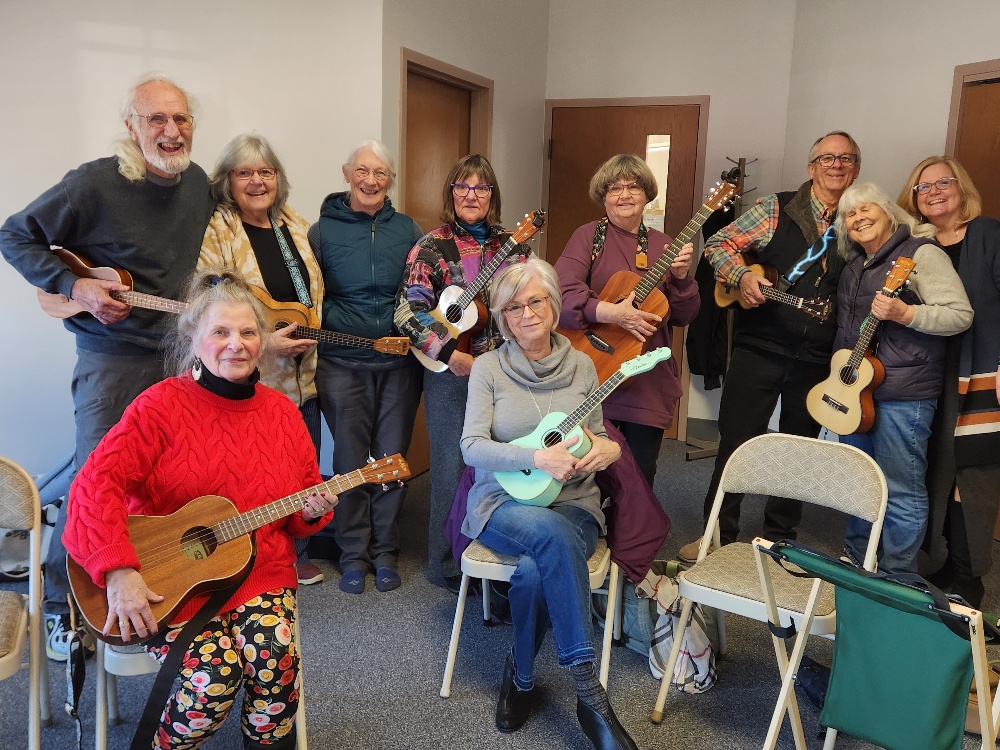
Meet the Chaplin Ukulele Band and hear a variety of songs that have inspired Americans over the last 250 years. The Chaplin Friends of the Library will provide light refreshments.
Tea Time Book Chat
Friday, September 25
3-4:30pm

What have you been reading this month? Join us for tea and share your favorite books this month. Please email librarydirector@chaplinct.org to register.
Cookbook Club: Farm to Table Recipes
Wednesday, September 30
6:00 -7:30 pm

This month we’ll be making recipes to celebrate the bounty of the season. Weather permitting, we’ll eat under the tent. Registration is required. If you’re interested in joining, please speak with a librarian.
Chaplin Ukulele Band
Wednesdays – 4:30 pm
Join the Chaplin Ukulele Band. No experience required. No ukulele? We have one available for checkout! Stop in and join the fun.
Friends Group Meeting
Third Wednesday of the month – 2:00 pm
We have a Friends group! If you are interested in helping the library, please attend a meeting. Please note there will be no meeting in September.
_______________________________________________
PROGRAM RECORDINGS
Bicentennial Talk:
The History of Chaplin Place Names
Watch the recording of Warren Church’s talk!
Join Chaplin resident and local historian Warren Church to learn about place names in Chaplin. Why is it called Bear Hill Rd? Who was Diana of Diana’s Pool?
Bicentennial Talk:
Ruth Snow Bowen, Chaplin Quilt Maker
Watch the Recording of Catherine Smith’s talk!
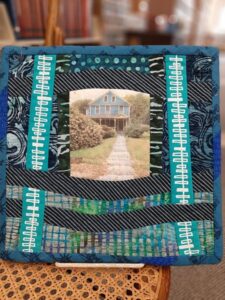
Chaplin resident and artist Catherine Whall Smith shared the history of former Chaplin resident and artist Ruth Snow Bowen, who lived on Chaplin Street and sold many of her wonderful quilts throughout Connecticut. Each month the library is displaying small fiber art pieces of homes on Chaplin Street paired with a quilt from Catherine’s collection.
National Poetry Month: An Evening with Connecticut’s New Poet Laureates
Recording includes Adelaide Northrop
Listen to Connecticut’s newest poet laureates, including Chaplin Poet Laureate Adelaide Northrop.
Bicentennial Talk: History of the William Ross Library
Recording of Leslie Ricklin and Ingrid Wood’s talk
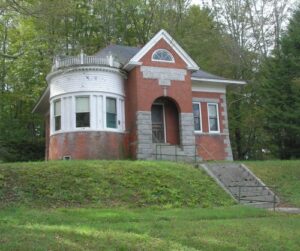
Chaplin resident Leslie Ricklin and Columbia Town Historian Ingrid Wood discussed the history of the William Ross Library.
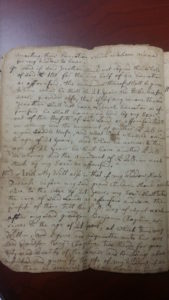
Bicentennial Talk: Benjamin Chaplin’s Will
Recording of Gavin Horning-Kane and Brendan Kane’s talk
The 2nd Chaplin Bicentennial talk was a discussion of Benjamin Chaplin’s will. Chaplin residents Gavin Horning-Kane and UConn History Professor Brendan Kane explored the contents of our town benefactor’s will. Since it was written in 1790, the handwriting can be difficult to read. View the will for yourself, try your hand at transcribing a portion of it, and discover a bit about our town’s history.
Virtual Bicentennial Talk – Trouble in the Land of Steady Habits:
The Constitution of 1818
Recording of Walter Woodward’s Talk is available!
In celebration of Chaplin’s bicentennial, Connecticut State Historian Walter Woodward discussed what was happening in our state when Chaplin was taking steps to become a town. Connecticut in 1818 was in many ways eerily similar to Connecticut today: A troubled state, seeking a new direction. This lecture highlights the perfect storm of crises — environmental, economic, demographic, religious, and political — which converged in the middle of the eighteen-teens (1810s) to force the state to rethink the ways it had been conducting its affairs for the previous two centuries.